





There Are So Many KiwiSaver Providers. How Do You Know Which One Is Right for You?
Date 13 Jul 2026
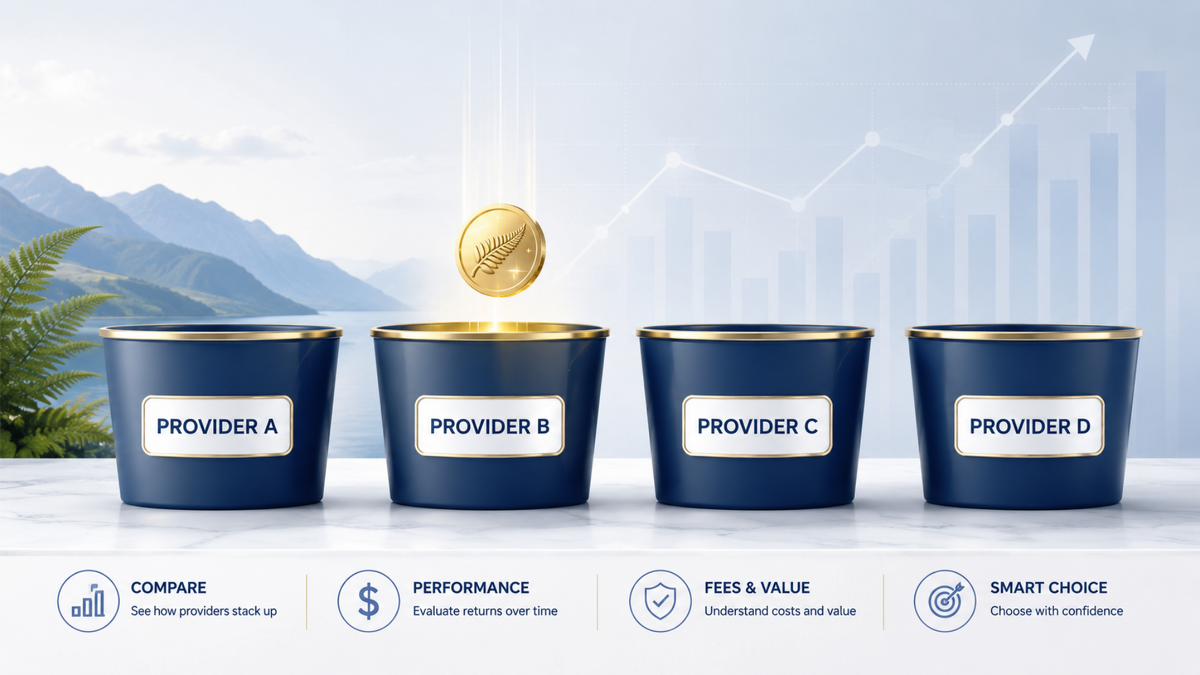
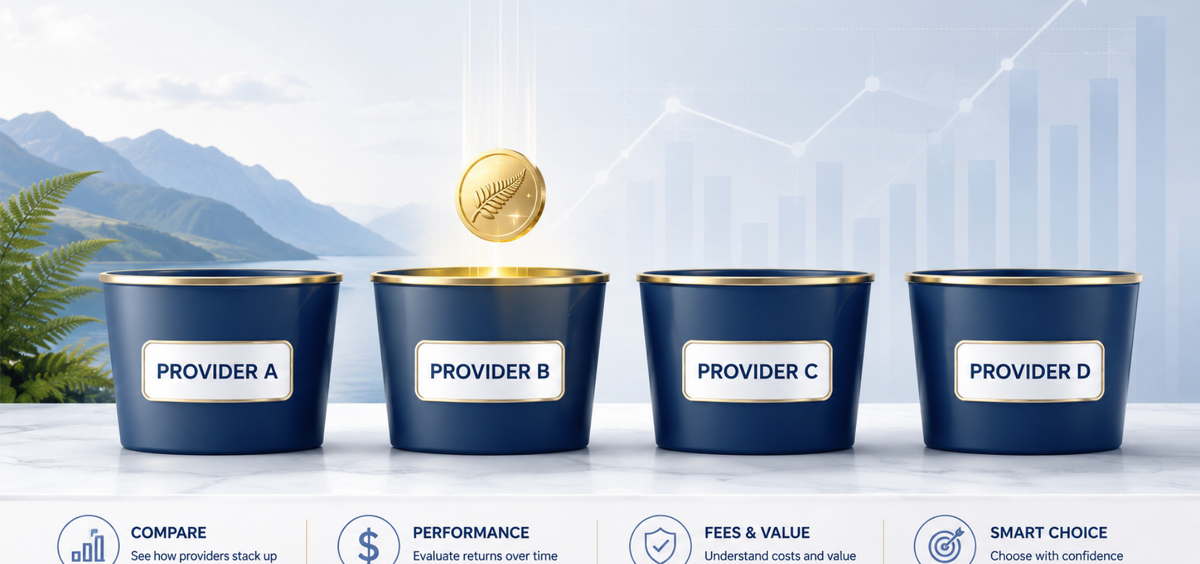
Which KiwiSaver Provider is the Best?
It sounds like a simple question.
And with so many providers, funds, fees, performance charts and advertisements competing for your attention, you would think there must be one obvious winner.
But here is the thing: There is no single “best” KiwiSaver provider for everyone.
The provider that suits your friend, your workmate or the person giving financial advice on TikTok might not be the right fit for you.
Because the more important question is not: “Who is the best provider?”
It is: “Which fund strategy best suits what I am trying to achieve?”
That small change in thinking can make a big difference.
First, Provider and Fund Are Not The Same Thing
This is where a lot of people get confused.
Your KiwiSaver provider is the company that manages your KiwiSaver scheme.
Your fund is where your money is actually invested within that scheme.
Think of it like choosing a gym.
The provider is the gym.
The fund is the training programme you are on.
You could join a great gym, but if your training programme does not suit your goal, it may not get you where you want to go.
The same idea applies to KiwiSaver.
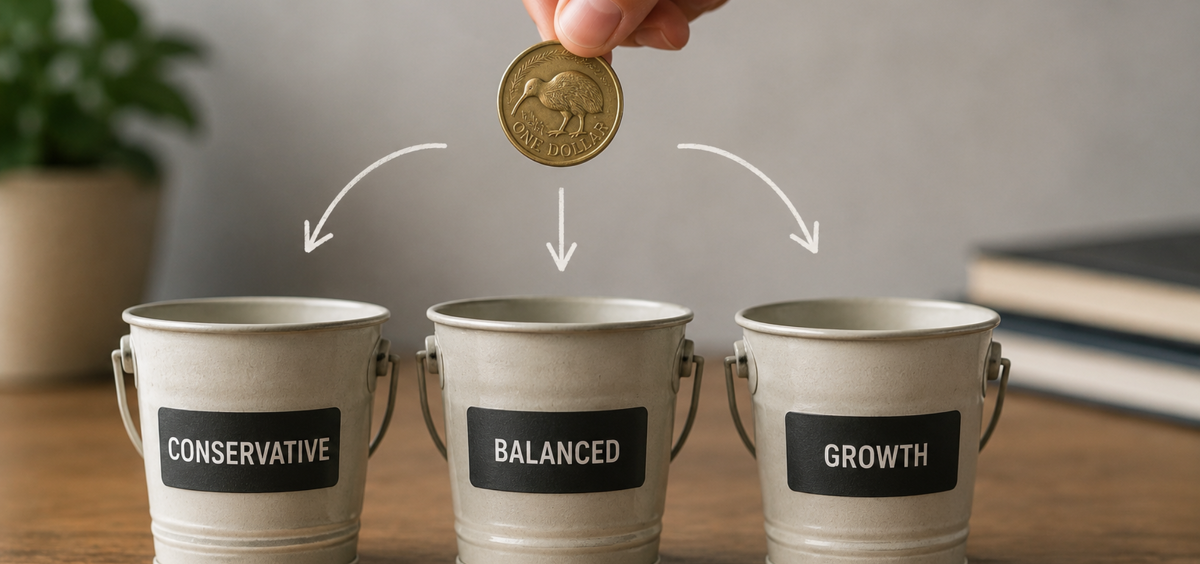
Different funds invest differently and come with different levels of risk. Your choice affects how much your balance may move up and down and the potential return you may receive over time.
So before getting caught up in provider names, logos or who had the best return last year, start with yourself.
What Are You Actually Using KiwiSaver For?
For most people, the answer will fall into one of two broad categories:
Buying a first home.
Or:
Saving for retirement.
The difference matters because your timeframe can influence how much investment risk may suit you.
Let’s look at two completely fictional examples.
Meet Sophie: She wants to buy her first home soon.
Sophie is 30.
She has been building her KiwiSaver balance for years and hopes to buy her first home within the next two years.
For Sophie, that KiwiSaver balance is no longer just a number she will not touch for decades.
She may need it soon.
Eligible first-home buyers can withdraw most of their KiwiSaver savings after being a member for at least three years.
That means Sophie may need to think carefully about how much investment risk she is comfortable taking as her buying date gets closer.
Why?
Because higher-risk investments can move up and down more sharply.
Imagine Sophie has finally built her deposit to $80,000.
Then, just before she finds the right home, investment markets fall and her balance drops significantly.
That could affect her plans.
It does not mean higher-risk funds are “bad”.
It means the timing of when you need the money matters.
The FMA notes that people getting closer to buying a first home should think carefully about whether a more conservative approach is appropriate, while people with a much longer investment timeframe may be better placed to tolerate more volatility.
Now meet Ben: Retirement is decades away.
Ben is also 30.
But he is not planning to use his KiwiSaver for a first home.
His goal is retirement, more than 30 years away.
Ben has something Sophie does not: Time.
If his KiwiSaver balance falls next month, he does not need to withdraw the money.
He may have decades for markets to recover and for his investments to continue growing.
For someone with a long timeframe, accepting more ups and downs may provide greater long-term growth potential. But that also means being comfortable seeing the balance fall occasionally – sometimes significantly.
And that last point is important.
Because the fund that looks best on a spreadsheet may not be right for you if every market drop makes you panic.
How Much Risk Can You Actually Handle?
Everyone likes the idea of higher returns.
The harder question is: How would you feel if your balance suddenly dropped?
Would you understand that markets move up and down?
Would you stay calm?
Or would you panic and immediately switch funds?
There is no shame in admitting that big drops would make you uncomfortable.
Your ability to emotionally handle volatility matters because making sudden decisions during a market fall can have long-term consequences.
The FMA found a large increase in KiwiSaver fund switching during the COVID-19 market drop, with switching peaking as the market was near its bottom.
That is why risk is not just about age.
It is also about you.
You could have 30 years until retirement, but if seeing your balance fall keeps you awake at night, you still need to understand what you are signing up for.
The right fund should not only suit your timeline.
It should also suit your ability to live with the journey.
Don’t Just Choose The Provider With The Best Return Last Year
This is an easy trap to fall into.
You look at a list of funds.
One had the highest return.
Decision made.
Except it is not that simple.
Last year’s winner will not necessarily be next year’s winner.
Different funds invest in different assets, markets and sectors, so they can perform differently depending on what is happening in the world.
Choosing based only on recent performance can mean chasing what has already happened rather than choosing a strategy that suits what you are trying to achieve.
A better starting point is to consider:
- Your goal.
- When you need the money.
- How much risk you can handle.
- What the fund invests in.
- What fees you are paying.
- And whether the provider’s investment approach and values matter to you.
These factors help you compare what you are actually getting, rather than simply picking the name at the top of last year’s performance table. The FMA also encourages KiwiSaver members to consider whether they are in the right fund and whether their provider represents good value for the fees being charged.
Yes, fees matter too.
Fees can sound boring.
But when you are investing over many years, they deserve attention.
Two funds might look similar but charge differently.
Higher fees do not automatically mean better results, and lower fees do not automatically make a fund the right choice.
The real question is: What am I paying, and what am I getting in return?
The FMA requires fund managers to consider whether their fees represent value for money, including the investment outcomes and services being provided to members.
So do not ignore fees.
But do not make your entire decision based on one number either.
Your Investment Values May Matter To You
For some people, the main focus is risk, returns and fees.
For others, what their money is invested in also matters.
You might care about environmental issues.
You might want to know whether certain industries are excluded.
You might prefer a particular approach to responsible investment.
Different providers and funds can take different approaches.
There is no universal right answer here.
The important thing is to understand what matters to you and check whether the fund you are in reflects it.
Because it is your money.
You should know where it is going.
The Fund You Chose Years Ago May Not Suit You Today
This might be the most important point in the entire article.
Life changes.
When you first joined KiwiSaver, you might have been 20 years old with no plans to buy a home.
Now you might be 32 and hoping to buy next year.
Or perhaps you originally planned to use KiwiSaver for a house, but you have since bought one and your focus is now retirement.
The goal changed.
But did the fund?
Many people spend more time comparing power companies or mobile phone plans than reviewing where tens of thousands of dollars of their own money is invested.
Your KiwiSaver settings do not need to change every time the market has a bad week.
But they should be reviewed when your goals, timeframe or circumstances change.
KiwiSaver members can change provider, and IRD notes that you can move to another provider by applying directly to the new one.
The key is to make changes for the right reason.
Not because of panic.
Not because of one bad month.
And not because your mate told you his fund went up more than yours last year.
So, which KiwiSaver provider is the best?
The honest answer is:
- It depends.
- It depends on what you are trying to achieve.
- It depends on when you need the money.
- It depends on how comfortable you are with your balance moving up and down.
- It depends on the fees, investment approach and services that matter to you.
- And it depends on whether the fund you are currently in still suits your life today.
The goal is not to find the KiwiSaver provider that everyone else says is the best.
The goal is to make sure your KiwiSaver is working towards your goal.
At the end of the day, it is your money.
Your fund.
Your choice.
But it should be an informed choice.
Unsure whether your current KiwiSaver fund suits where you are heading? Send us a message. Our advice is free, and we can help you understand your options.
Watch this video as our Director and qualified financial adviser, Mils Muliaina, explains why there is no single “best” KiwiSaver provider – and what you should be looking at instead.
This article provides general information only and does not take into account your individual circumstances, goals or risk tolerance. KiwiSaver is an investment and returns are not guaranteed. Consider getting personalised financial advice before making investment decisions.