





Is Your KiwiSaver Actually Working for You?
Date 23 May 2026
Every payday, a portion of your hard-earned money may be going into KiwiSaver.
For many New Zealanders, it quietly ticks away in the background. Money goes in, your employer contributes if you are eligible, and over time, the balance hopefully grows. But here’s the question most people do not ask often enough:
Is your KiwiSaver actually working for you?
KiwiSaver is not just a savings account. It is a long-term investment designed to help New Zealanders save for retirement, and in some cases, help with buying a first home. Your money is invested in a managed fund, which means it is pooled with other investors and spread across different types of investments.
That means your KiwiSaver is doing more than just sitting there. It is invested. And because it is invested, the fund you choose can make a big difference over time.
The Problem With “Set and Forget”
A lot of people join KiwiSaver, choose a fund quickly or get placed into one automatically and then leave it there for years.
That is understandable. KiwiSaver can feel confusing. Terms like conservative, balanced, growth, aggressive, volatility, contributions and returns can sound complicated if you do not deal with finance every day.
But the issue is this: your life changes.
You may be saving for your first home.
You may be planning for retirement.
You may have changed jobs.
You may be earning more than you used to.
You may have different goals now compared with when you first joined.
If your KiwiSaver fund has not changed with you, it may not be aligned with what you are actually trying to achieve.
Your KiwiSaver Should Match Your Goal
The right KiwiSaver setup depends heavily on what you want to use it for.
For example, if you are planning to buy your first home soon, you may not want your money exposed to big market movements right before you need to use it. Eligible KiwiSaver members can use their funds for a first-home deposit after being in KiwiSaver for three years, so timing matters when your goal is close.
In that situation, a more conservative fund may make sense because it generally aims to reduce volatility. In other words, that means the balance may move up and down less dramatically.
On the other hand, if you are not planning to touch your KiwiSaver for many years and your focus is retirement, a growth fund may be more suitable. Growth funds can rise and fall more along the way, but they are designed to give your money more opportunity to grow over the long term.
That does not mean one fund is “better” than another. It means the right fund depends on your goal, your timeframe and how comfortable you are with ups and downs.
Conservative, Balanced or Growth – What Does That Actually Mean?
Here is a simple way to think about it.
A conservative fund usually has more lower-risk investments. It may suit someone who needs their money sooner or wants less movement in their balance.
A balanced fund sits somewhere in the middle. It aims to provide a mix of stability and growth.
A growth fund usually has more exposure to investments like shares and property. That can mean bigger ups and downs, but also more opportunity for long-term growth.
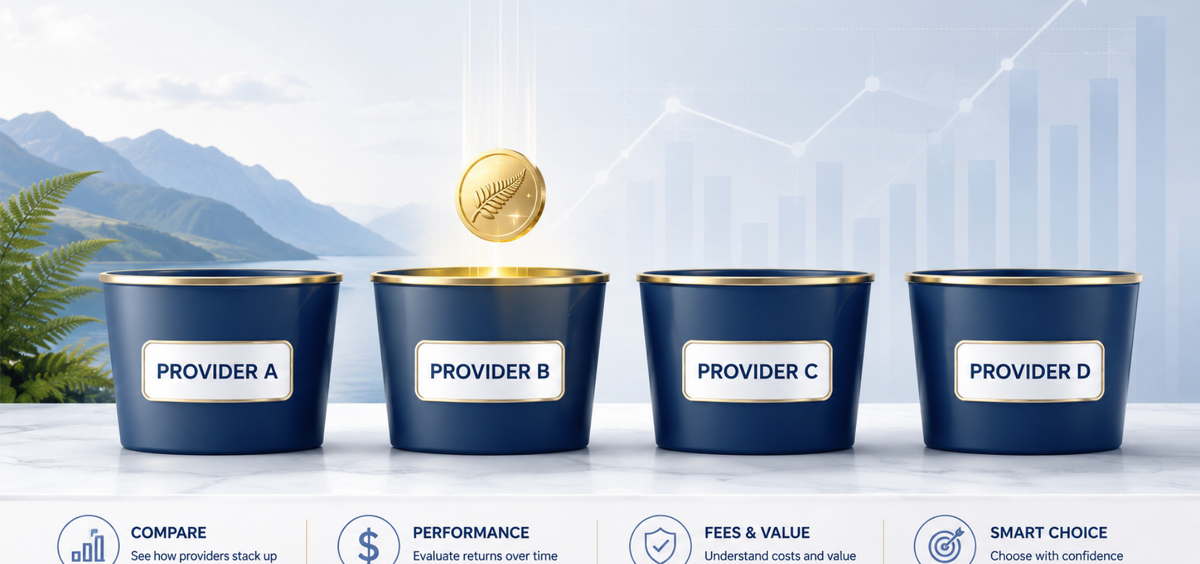
Sorted’s KiwiSaver tools group funds by risk type, including defensive, conservative, balanced, growth and aggressive, to help people compare options based on their timeframe and comfort with risk.
The key is not to guess. The key is to choose with purpose.
Why Reviewing Your KiwiSaver Matters
A KiwiSaver review does not have to be complicated.
It simply means asking a few important questions:
What am I using KiwiSaver for?
Is it for a first home, retirement, or both?
When do I need the money?
Soon, in a few years, or decades from now?
Am I in the right type of fund?
Does my current fund match my timeframe and comfort with risk?
Am I contributing enough?
Your KiwiSaver balance is made up of contributions, investment returns, fees, taxes and any withdrawals.
Do I understand what I’m invested in?
Many people know they have KiwiSaver, but not what fund they are in.
These are simple questions, but they can make a meaningful difference.
It’s Not Just About Having KiwiSaver
Having KiwiSaver is a good start.
But just having an account does not automatically mean it is working as well as it could be.
Think of it like owning a car. Having the car is one thing. But if the tyres are flat, the alignment is off, or you are driving in the wrong direction, you are not getting the best out of it.
KiwiSaver is similar. It needs to be aligned with where you are trying to go.
For a first-home buyer, that could mean reducing risk as you get closer to buying.
For someone in their 20s, 30s or 40s saving for retirement, that could mean looking at whether their money has enough opportunity to grow.
For someone closer to retirement, it could mean checking whether their fund still matches their stage of life.
There is no one-size-fits-all answer.
A Small Review Now Could Make a Big Difference Later
The biggest mistake people make with KiwiSaver is assuming it will just look after itself.
Yes, KiwiSaver is long-term.
Yes, it is designed to grow over time.
But it still needs the right strategy behind it.
A quick review could help you understand whether your current fund matches your goals, whether your contribution rate is suitable, and whether your money is positioned in a way that makes sense for your future.
You do not need to be a financial expert to ask better questions. You just need to know that your KiwiSaver should be doing a job for you.
In this video, our director Mils Muliaina explains why KiwiSaver should not be something you simply set and forget.
Whether you are saving for your first home, planning for retirement, or just unsure whether your current fund is right for you, it is worth taking a closer look.
If you have not reviewed your KiwiSaver in a while, send us a message.
Our advice is free, and we can help you understand whether your KiwiSaver is working for you.
Note: This article is general information only and does not take into account your personal financial situation. For personalised advice, speak with a qualified financial adviser.