





Freehold vs Cross Lease vs Unit Title vs Leasehold – What Are You Actually Buying?
Date 28 Feb 2026
When you purchase a property in New Zealand, you’re not just buying a house – you’re buying a type of title.
And that title affects:
- Your control over the property
- Your ability to renovate
- Your ongoing costs
- How banks assess your loan
Here’s a clear, simple breakdown of the four main property titles.
1. Freehold (Fee Simple)
What it means:
You own the land and the building outright.
This is the most straightforward and common form of ownership.
Pros:
- Full control over your property (subject to council rules)
- No shared land ownership
- No body corporate fees
- Generally preferred by banks
- Stronger resale appeal
Cons:
- You’re responsible for all maintenance
- Usually higher purchase price compared to other title types
In simple terms:
Freehold gives you the most flexibility and independence.
2. Cross Lease
What it means:
You own a share of the land with other owners, and you lease your specific dwelling from the group of owners.
Most cross leases are older properties with two or more homes on one section.
Pros:
- Often more affordable than freehold
- Can be in established suburbs
- Banks will lend on them (with conditions)
Cons:
- Shared land ownership
- Exterior changes usually require neighbour consent
- Issues can arise if the flats plan is outdated
- Can create complications during resale
In simple terms:
You own your home, but you share the land — and that means shared decision-making.
3. Unit Title (Strata Title)
What it means:
Common for apartments and townhouses.
You own your individual unit and share ownership of common areas (hallways, lifts, driveways, gardens).
A body corporate manages the shared areas and charges regular fees.
Pros:
- Low-maintenance living
- Shared responsibility for common areas
- Structured management
- Common in central locations
Cons:
- Ongoing body corporate fees
- Body corporate rules and restrictions
- Special levies for major repairs
- Banks may assess apartments more cautiously
In simple terms:
You own your apartment but you share the building.
4. Leasehold
What it means:
You own the building but you lease the land underneath it.
You pay ground rent to the landowner, and that rent can increase over time.
Pros:
- Lower upfront purchase price
- Can provide access to high-value locations
Cons:
- Ongoing ground rent payments
- Ground rent reviews can increase significantly
- Banks assess leasehold properties more conservatively
- Resale value can fluctuate depending on lease terms
In simple terms:
You own the house but not the land it sits on.
Why This Matters for Lending
Banks do not treat all title types the same.
They consider:
- Risk profile
- Marketability
- Ongoing financial commitments (body corp or ground rent)
- Lease terms (for leasehold)
- Legal documentation accuracy (for cross lease)
For example:
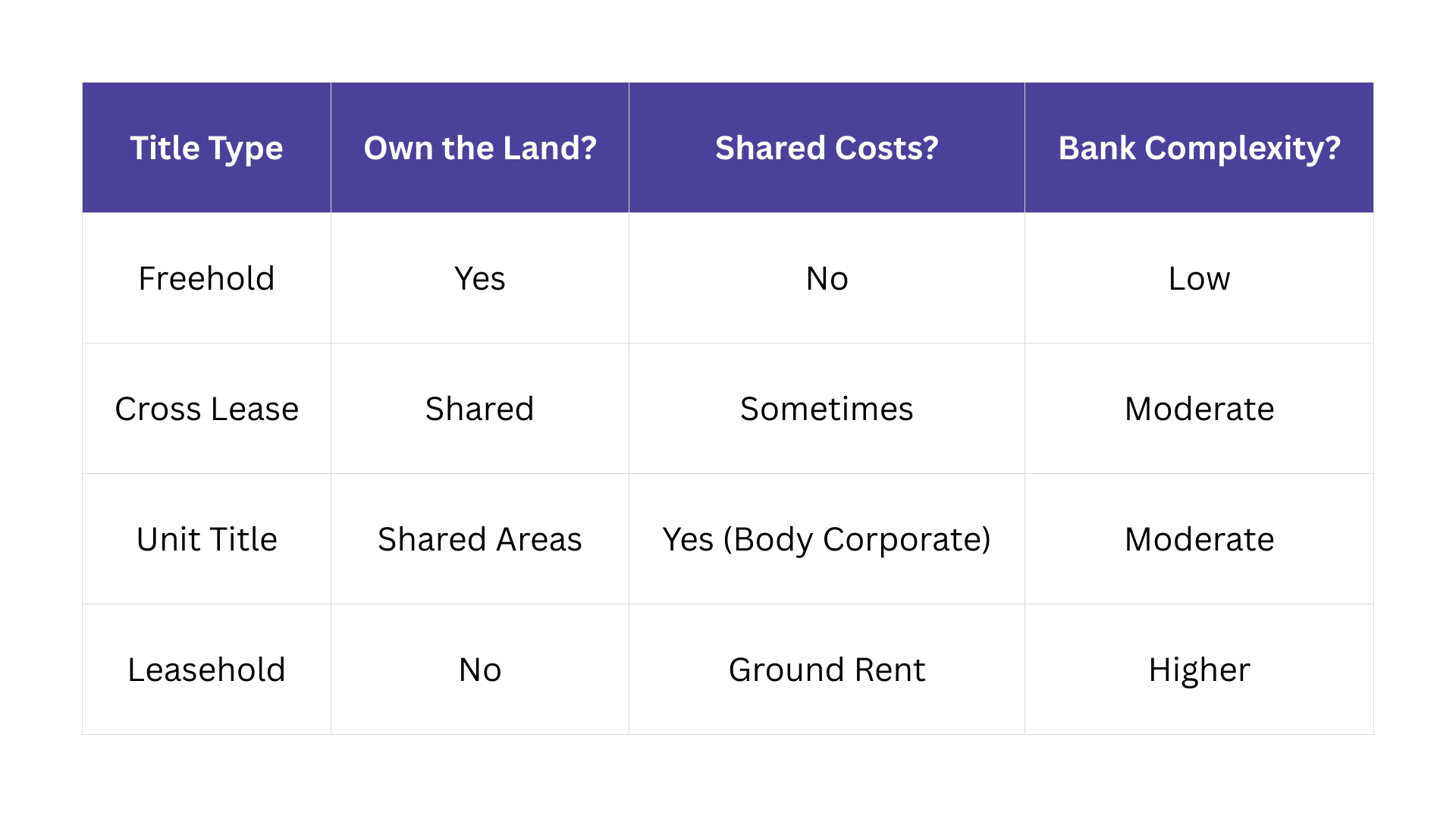
- Freehold is typically the simplest from a lending perspective.
- Cross lease may require additional checks.
- Unit titles involve reviewing body corporate records.
- Leasehold often requires closer scrutiny due to ground rent structures.
A Quick Comparison
The Key Question
Before you buy, ask:
- What type of title is this?
- What restrictions apply?
- What ongoing costs are involved?
- How will a bank assess this?
Not all properties are created equal even if they look similar.
Understanding the title type early can save you stress, time and money later.
Final Thought
The property might look perfect. But the title determines what you truly own.
Before you sign anything, make sure you understand exactly what you’re buying and how it affects your lending position.
For a quick and practical breakdown, watch this short video where we explain the differences in simple terms.
If you’re unsure about a property you’re considering, reach out to us.
Our advice is free – and a short conversation early can save you a lot of stress later.