





Are You in the Right KiwiSaver Fund?
Date 13 Jun 2026
For many Kiwis, KiwiSaver is one of the biggest investments they'll ever have.
Yet surprisingly, many people don't know what fund they're in, why they're in it, or whether it's still the right fit for where they're headed.
The reality is that KiwiSaver is not just a savings account.
Your money is invested, and the fund you choose can have a significant impact on how much you end up with in the future.
The good news? You don't need to be a financial expert to understand the basics.
Not All KiwiSaver Funds Are the Same
When you join KiwiSaver, your money is invested into a fund.
Different funds invest your money in different ways, which means they come with different levels of risk and potential return.
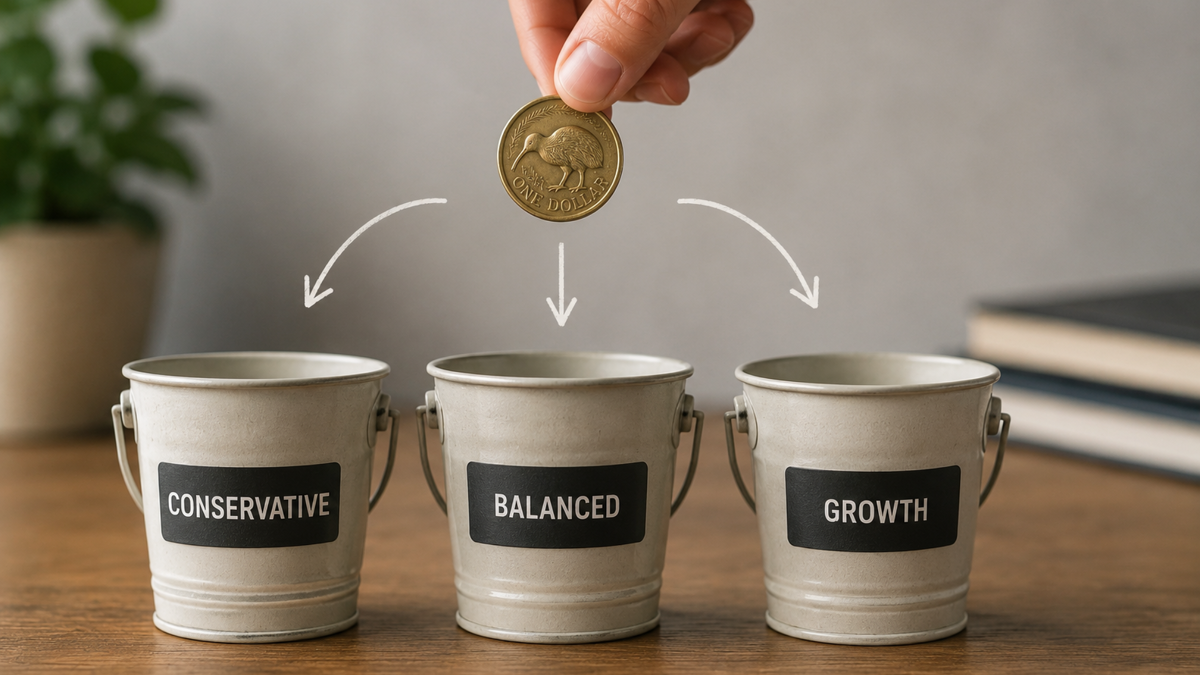
Generally speaking, KiwiSaver funds sit somewhere along a spectrum:
Conservative Funds
Conservative funds are designed to prioritise stability.
They typically hold more cash and fixed-interest investments, which means they tend to experience fewer ups and downs.
For someone planning to use their KiwiSaver in the near future – such as for a first-home deposit or retirement within the next few years – a conservative fund may be appropriate because preserving capital is often more important than chasing higher returns.
The trade-off is that while your balance may fluctuate less, it may also grow more slowly over time.
Balanced Funds
Balanced funds sit in the middle.
They aim to provide a mix of growth and stability by investing across a range of assets.
Many people find balanced funds appealing because they can offer a compromise between risk and potential return.
However, "balanced" doesn't automatically mean it's the right choice. Whether it's suitable depends entirely on your goals and timeframe.
Growth Funds
Growth funds invest more heavily in shares and growth assets.
That means the value of your KiwiSaver may move up and down more noticeably in the short term.
While those fluctuations can feel uncomfortable, growth funds have historically provided stronger long-term growth potential than more conservative options.
For someone with many years before retirement, those temporary market movements may be less important than the potential for greater growth over the long run.
Aggressive Funds
Aggressive funds take growth one step further.
They are typically designed for investors with a long investment horizon who are comfortable with larger market movements.
These funds can experience significant short-term fluctuations, but they are also designed to maximise long-term growth potential.
Again, the key consideration is not whether aggressive is "better" – it's whether it aligns with your circumstances.
So Which Fund Is Best?
This is where many people get caught out.
There is no universal "best" KiwiSaver fund.
The right fund for a 25-year-old saving for retirement may be completely wrong for someone hoping to buy their first home next year.
Your KiwiSaver strategy should be based on:
- Your goals
- When you expect to use the money
- Your comfort with investment risk
- Your overall financial situation
What works for a friend, colleague, or family member may not work for you.
Why "Set and Forget" Can Be Costly
Life changes.
Your KiwiSaver strategy should sometimes change with it.
Perhaps when you joined KiwiSaver, retirement was decades away and a growth fund made sense.
Now you're thinking about buying your first home.
Or perhaps you've been sitting in a conservative fund for years because it felt safe, but retirement is still 20 or 30 years away.
In both situations, your current fund may no longer match your goals.
That's why it's worth reviewing your KiwiSaver from time to time rather than simply setting it up and never looking at it again.
What Should You Do Next?
If you don't know what fund you're currently in, that's a great place to start.
Ask yourself:
- What am I saving for?
- When am I likely to access this money?
- How comfortable am I with market ups and downs?
- Does my current fund align with those answers?
You don't need to make changes based on what you read online or what someone else is doing.
What matters is understanding whether your KiwiSaver strategy still suits your personal situation.
We Can Help
Many people avoid reviewing their KiwiSaver because they worry it will be complicated, or that they’ll be pressured into making changes.
It doesn’t have to be.
At The Mortgage Hub, we can help you understand your KiwiSaver, explain your options in plain English, and help you work out whether your current fund still aligns with your goals.
Watch the video from our Director, Mils Muliaina, to learn why choosing the right KiwiSaver fund could have a major impact on your future financial outcome.
And if you’d like a KiwiSaver review, or simply want to know whether you’re on the right track, send us a message.
Our advice is free, and we’d be happy to help.